Explore reusable printed fabric bag options, materials, use cases and the practical details behind each style.
If you were asked 20 years ago to describe a carrier bag, you’d never even have mentioned fabric. For years the single-use carrier dominated retail as the cheap, simple and altogether easy option. As consumers have become more conscious of their choices, reusable options have become more popular, and that pretty much starts and ends with the fabric carrier bag.
Every household has a printed fabric bag. Whether it’s a clean cotton tote or a woven plastic bag for life, the fabric bag landscape contains a plethora of options for businesses in all contexts. Great as merchandise brands for events, or as reusable marketing toolkits for small retail businesses, the printed fabric bag is versatile in both style and substance.

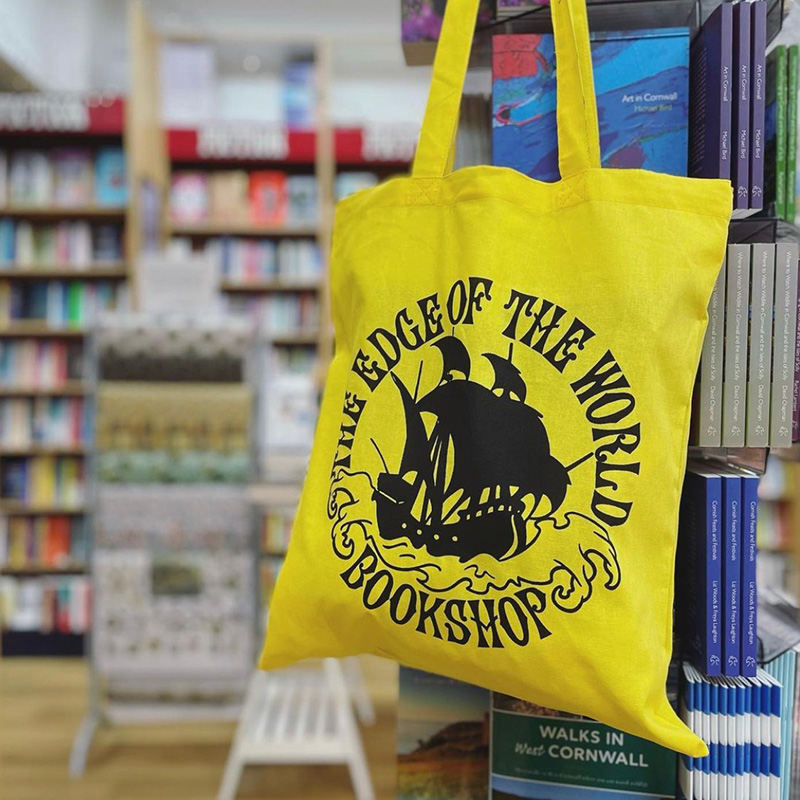
Cotton bags tick pretty much every box and are a popular choice for the common tote bag. Stylish, functional, strong and soft, these bags never let you down. Our printed cotton bag range includes both regular sized tote bags and large tote bags, as well as drawstring bags and gift pouches.
Learn More
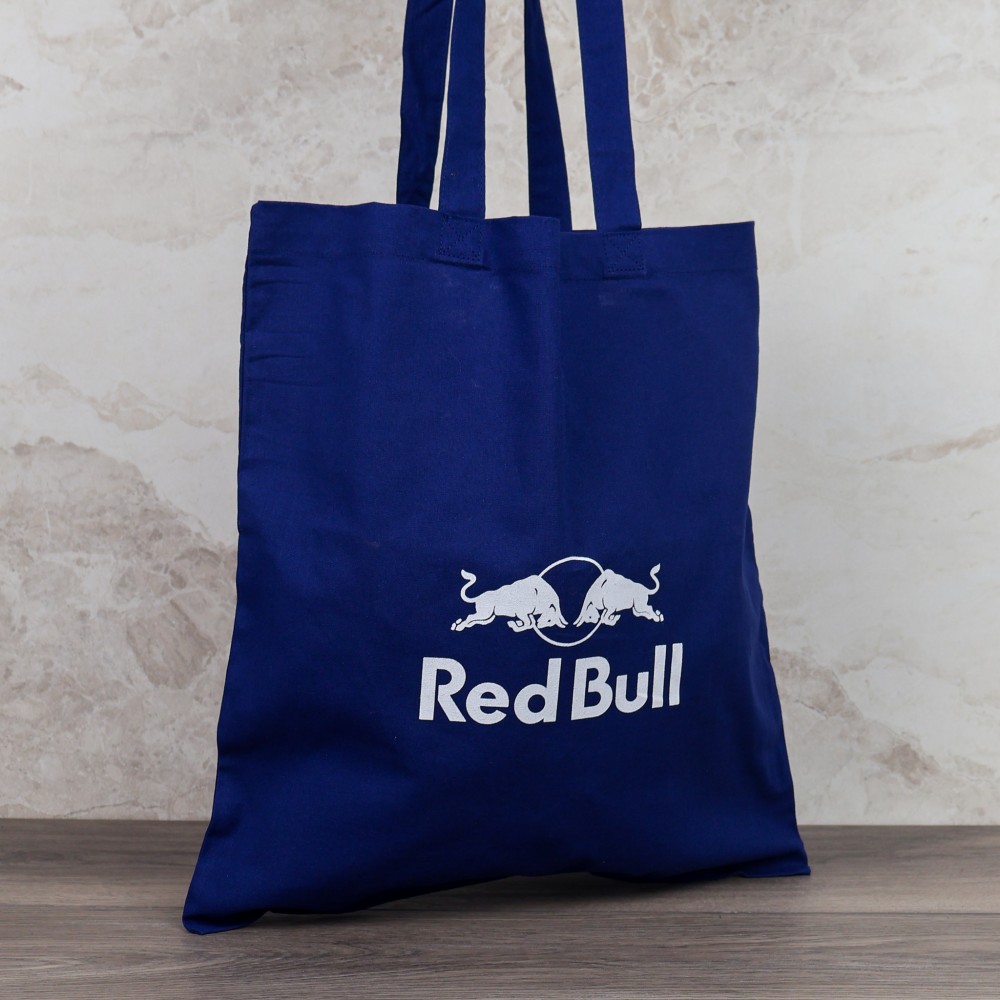
Canvas has become synonymous with the modern tote bag. This material is strong, simple and no-nonsense. Canvas is strong and thin, making it a cost-effective printed fabric bag option. Our printed canvas bag range includes the popular canvas tote bag, as well as larger options.
Learn More
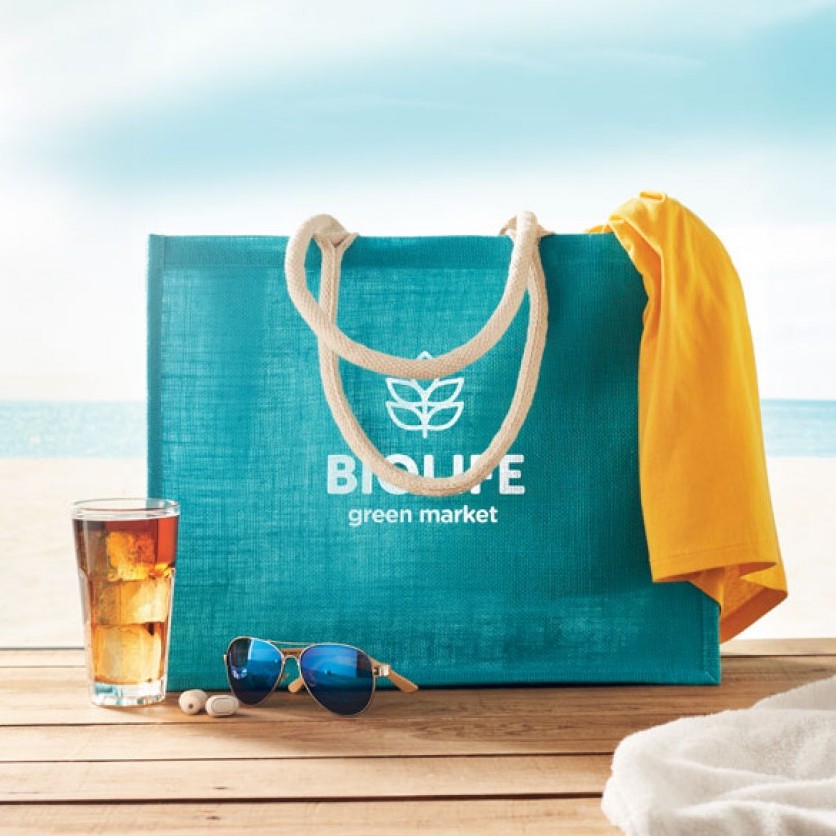
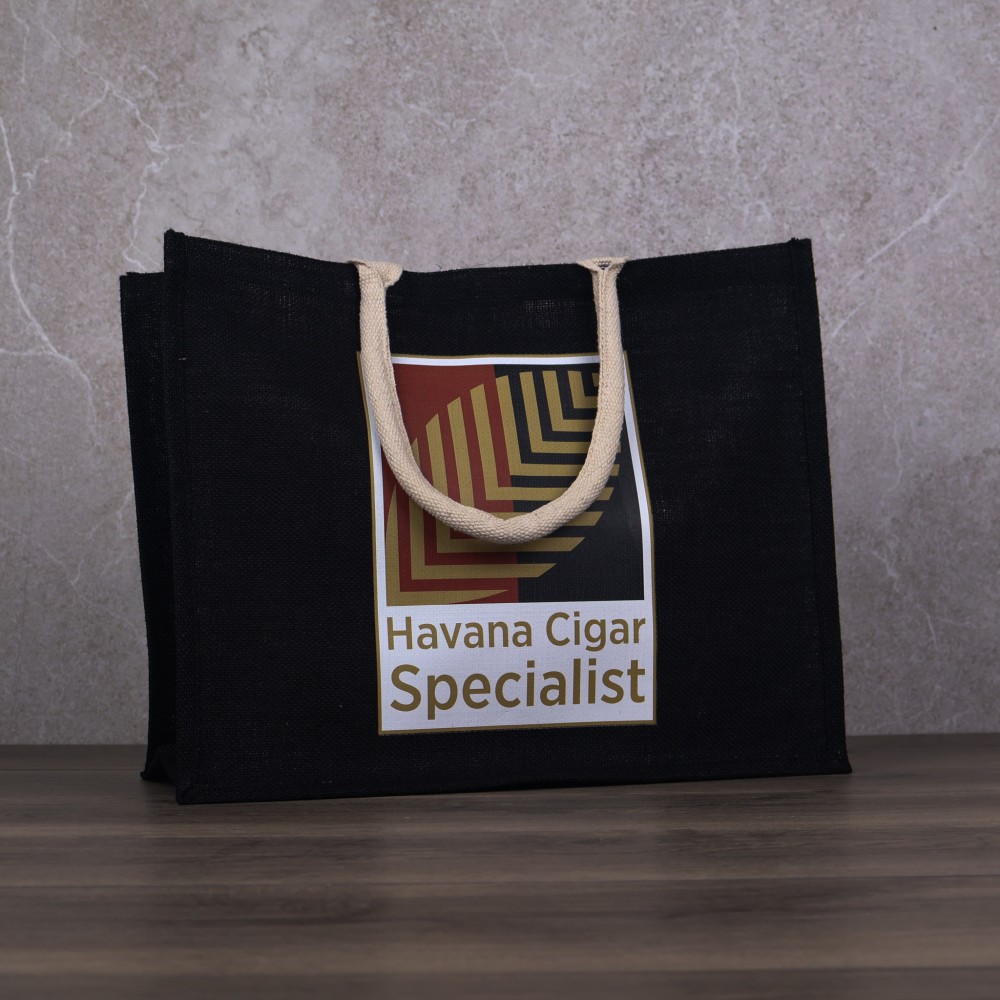
Jute is an all-round favourite fabric bag material. Lightweight and rustic, these bags are epitomic of nature. Jute bags are soft, comfortable to hold and extremely strong. They’re also biodegradable, making them one of the few bags where correct disposal can significantly minimise their environmental impact. Our jute bag range includes both regular-sized and large tote bags, bottle bags, drawstring bags and gift pouches.
Learn More
Addressing the elephant in the room: non-woven bags are made from polypropylene, which is plastic. Non-woven bags, however, bridge the gap between reusability and cost-effectiveness, providing a middle-ground in terms of quality, style, comfort and robustness. If you’re looking for a fabric tote bag option that won’t break the bank, non-woven is the way to go. Our non-woven bag range includes regular tote bags, large tote bags and drawstring bags.
Learn More
Woven bags shouldn’t be forgotten as these bags are an incredibly popular option. Similar to non-woven, these bags are made from polypropylene but are made from a more unified arrangement of the fibres. This makes them much stronger and durable at the expense of increasing their manufacturing complexity and cost. This is the common material choice for a bag for life, as the increased durability is a must-have for bags that need extra longevity. If you’re looking for a printed woven bag, though it’s not part of our standard range, we can get you a quote. Give us a call or drop us an email with your requirements.
Call Us
A printed fabric drawstring bag really rides the line between a carrier bag and a stylish bag. Extremely functional, reusable, ergonomic, comfortable and beautifully branded, fabric drawstring bags are the perfect way to get your bag used and your brand seen. With the modern surge in popularity for drawstring bags, primarily orchestrated by the infamous JD Bag, a printed fabric drawstring bag in a rustic jute or comfortable cotton is takes this to another level.
Learn More
What separates a tote bag from a fabric bag? The answer is, truthfully, nothing. Tote bags are traditionally fabric, and they’re epitomised by cotton & canvas shopping bags. Tote bags are classified as more commercial and shopping-oriented than a fabric bag, which is a versatile and highly multi-applicable material. Tote bags are all about style, and printed fabric tote bags exude stylish simplicity. Looking for a printed tote for your business? Look no further.
Learn More
Fabric bags enable a great opportunity for eco-friendliness. Just look at the traditional bag-for-life – created to reduce reliance on single-use carrier bags in favour of a one-time-purchase bag that you can use for the rest of your life. In practice, achieving this eco-friendliness is all about your own policy, but creating a fabric bag that your customers want to reuse is critical. Achieve long-term reuse, and you can’t get more eco-friendly than a printed fabric bag.
Learn More
Whether you’re hosting or attending, fabric bags are always a good option for event bags. Great prints can help achieve your branding and marketing goals, whilst high-quality materials mean your bags are an extension of your event merchandise. With quality options such as cotton, canvas & jute, as well as great middle-grounds like non-woven, it’s not about whether you’re going to use a fabric bag, but what material suits your brand, budget & event objectives.
Learn More
Printed carrier bags in the modern retail arena are no longer just an afterthought – getting this right can be a valuable marketing opportunity. Customers expect multiple bag options to be available, and reusable fabric bags are a non-negotiable range requirement. Whether it’s a bag for life, or something smaller & comfortable, most retailers will have a printed fabric bag that forms a key part of their carrier bag arsenal.
Learn More
The configuration of your carrier bag material is truly your choice, and when it comes to fabric bags, it’s no different. If recycled materials (even fairtrade and organic) is a priority for your bags, then we can ensure your bags meet this requirement. Our flexibility and wide range allow us to cater to many different requirements, and when it comes to eco-friendliness, we’ve got you covered.
Learn More
It is estimated that a cotton tote bag needs to be reused 7,100 times to make it a truly environmentally friendly alternative to plastic.
This is based on the overall carbon footprint of a bag like this, which is a damning statement for fabric bags. Does that make them inherently environmentally damaging? No, but it does throw up an important point around the way fabric bags are implemented by brands and used (or not used) by consumers.
Read MoreTake, for instance, a fabric bag for life. Inherently, a bag for life is sold by a retailer to customers who shop regularly and would be willing to spend a small amount extra for a quality, stylish fabric bag option which means they no longer need single-use bags. The customer then reuses this bag until it breaks, recycling it with the retailer and getting a new one. Such a scheme is environmentally beneficial, or at least tries to achieve three important goals:
1. Reducing reliance on single-use materials to prevent wastage.
2. Increasing the lifespan of a bag and the amount it is reused.
3. Recycling or repurposing bag material when damaged or spoiled.
In this instance, a fabric bag achieves eco-friendly goals through a carefully thought-out and calculated scheme.
Now, take another example. A brand is hosting an event. The brand, alongside 20 other brands attending the event, produces 1000 cotton tote bags to hand out for free to event attendees. Each attendee receives 2-3 cotton tote bags, which, when they get home, get stored in the cupboard alongside the 10 other bags they have from previous events or engagements, never to be used again.
The main difference here is that, without a plan or a consideration for how a fabric bag can be reused, recycled or provide value that goes beyond that which can be achieved by a single-use bag, a fabric bag is environmentally damaging. To prevent this, brands need to utilise fabric bags for more than their marketing purpose. Implementing the use of a fabric bag with a sustainable focus at heart is all about creating an environment for reuse, recycling, and mitigation of single-use bags.

A printed fabric bag is built for reusability, and a bag that can be reused needs to be built to stand the test of time. No matter where on the quality scale a fabric bag material sits, it always needs to be good enough to last a long time.
Read MoreThere’s a quality scale when it comes to fabric bags, not just in terms of the material type, but also the specifications of that material. A thick cotton bag might be deemed higher quality than a thin canvas bag, even though canvas is typically a stronger and more consistently high-quality material option than cotton overall.
Generally, you can’t go wrong in terms of quality if you’re choosing cotton, canvas or jute. All three materials feel and look premium and carry a print with the sort of swagger and elegance you’d expect from a fabric tote bag. Fabric bags with a low level of thickness, around 140 gsm, will typically feel ‘cheaper’ than a thicker bag – something you’d expect given the lower cost – but nothing can take away from the inherent quality of these material types.
If you want the best-of-the-best, you’ll want to go for a bag at 180 gsm or higher, with the best quality tote bags being your ‘beach’-style bags at around 380 gsm. There is a good amount of variance when it comes to fabric tote bag thickness, and high-end brands will want to opt for the best quality, ensuring their carrier bags align with their brand.
A primary indicator of quality is often a material’s ethical attributes. Customers are more aware than ever about where their products are sourced, and more importantly, how they are sourced. Whether the materials are recycled, fairtrade or organic might be a subjective mark of quality, but these points are crucial for both customers, and upholding brand values. The factors and variables by which consumers measure quality are changing, and as such, sustainable & ethical sourcing is becoming the earmark of luxury.
Quality isn’t just about look and feel, and it’s not all about perception. Robustness, whether cheap or luxurious, is a binary quality and not up for debate. Sometimes the cheapest option, in the instance of fabric bags, non-woven, can still be incredibly hard-wearing. If you judge a fabric bag on its robustness, you can never go too far-wrong. It’s fair to say that all fabric bags are high-quality, because they’ll all be incredibly reliable in terms of wear-and-tear and longevity. If you’re looking for a high-quality option, fabric has the best range in terms of material choices and variance that can help you hit your budget, and never compromise on the quality.

When it comes to cost, the main perception of fabric bags is that they’re among the most expensive options for carrier bags. That perception holds up – these bags aren’t cheap, and that’s in terms of their material cost, transport cost and printing cost. Ultimately, these bags are made from more expensive materials than most bag types, and some of the highest quality fabric bags start to ride the line between carrier bag and a genuinely high-quality shopping bag.
Read More‘Fabric’ isn’t all-encompassing when it comes to price. Depending on the material you opt for, and even the complexity of the bags manufacturing, cost can vary significantly. In general, the most expensive bag material is canvas, as it’s the most robust material option. That’s followed by jute, a more natural option that’s typically made with cotton-padded handles, increasing its complexity and cost. Cotton is then the next least expensive, due to its simplicity and variability of options. The most cost-effective material option is non-woven. This material is made from polypropylene, a synthetic fibre. Also, because the material is unwoven, the manufacturing is much less complex. These bags are generally lower quality, but a lot lower cost, and a great entry point for fabric bags and a significant step-up from paper and plastic options.
If your heart is set on a natural fabric such as cotton, but cost is a big factor, one of the benefits of fabric bags is the variability of thickness and sizes. Cotton bags come in a range of different configurations and thicknesses, which can help keep costs down. You can also opt for a smaller size of bag, depending on your objectives and use case for bags. If cost is a big factor, let us know and we’ll ensure you have all the information you need in order to make the right decision.
Another factor that can impact on cost is the specification of the bag with regards to its ethical attributes. For instance, a fabric bag made from recycled, organic, or fairtrade material will cost more than a standard fabric bag, no matter which material option you choose. If these ethical considerations are high on your list of important factors, be prepared for the cost to be slightly higher.
The final factor that can have perhaps the greatest impact on cost is the quantity being ordered. Unit cost of printed fabric bags will change significantly depending on the number of bags you want to order. The more you order, the lower the unit cost per bag. Our minimum order quantity is set at 25 bags, as below this, your unit price will increase significantly.

Fabric bags might appear on the surface to lack versatility in their customisation options. After all, their material makeup is much more complex. However, you have a lot more control over the look and feel of your printed fabric bags than you may think.
Read MoreCustomisation obviously depends on a lot of factors, mainly the bag material and your budget. It will also depend on the configuration of the bag you’re going for, and the size of the bag. All fabric bags can be printed with your own custom design, meaning you’ll always have a unique look and feel, no matter what bag you choose.
Some bags, such as large jute shopping bags and long-handled cotton shopping bags can be made with coloured handles. The colour choices may be limited, and we’ll advise on what can and can’t be done, as well as which colours might clash with your branding and print. Varying the handle colour can be a great way to create a one-of-a-kind bag that stands out from the crowd.
We’re also able to source bags of unique shapes, sizes and configurations. Just ask our team for the catalogue of bags we can supply and print. Your bag requirement will differ greatly from other brands, and we don’t expect all of our standard sizes and shapes to fit the needs of every brand and use case. Let us know what you’re looking for, and we’ll find a bag that fits.
When it comes to a printed tote bag, one of the most important factors is colour. You need a bag that fits your brand, and a bag with your brand colours is instantly recognisable. Our range of fabric tote bags can come in a range of colours, in varying configurations. Certain colours will affect the contrast of your print, for instance, a dark colour may require a white print.

Printed fabric bags are one of the most impactful carrier bags when it comes to their marketing & awareness effectiveness. From their reusability to their flexibility, these bags are a great way for brands of all sizes to get their marketing messages seen.
Read MorePrinted fabric tote bags are a staple event bag, which is indicative of their marketing effectiveness. Not only do people love to pick up a tote bag at an event due to its quality, but brands love them for their reusability and marketing effectiveness. In the 21st century, brands can utilise offline to online strategies such as printing QR codes on their bags to advertise their website, products or marketing campaigns. Printed fabric bags are perfect for this, enabling you to get more eyes on your marketing messages.
It’s the quality of a fabric bag that makes them so effective for these strategies. Most people will just use a paper or a plastic bag once and discard it. A fabric bag provides a reusable alternative for consumers, something they can take out time and again, each time showing your branding and messaging to anyone who walks by.
A great example of how fabric bags can be used as an ideal marketing tool can be seen by Fortnum & Mason. Their bag for life is a beautiful jute shopping bag printed with their high-end, luxury branding. These bags are not only the perfect advertisement for their business and brand, but they’re also a high-quality revenue generator and a status symbol for their customers. Read more about fabric bags for life here.


As a marketing manager or events manager, event season is a key time of year to generate interest in your business. Whether you’re hosting an event or conference, or exhibiting at an industry trade show, it’s an opportunity to showcase your business’s products and services to attendees.
Branded merchandise acts as a physical reminder of your brand, extending messaging and triggering brand recall long after it concludes.
Read More.png)
A ‘bag for life’ refers to a type of bag, typically sold by supermarkets and high-street retailers, that is designed to be purchased once and used for life, with free replacement for damaged or worn-out bags. The bag for life is more than just a bag; it’s a scheme designed to encourage customers to avoid using single-use carrier bags and encourage the uptake of reusable bags with better ergonomics.
The complete guide to all things bag for life, including the variations used by the major UK retailers and what actually makes a bag a 'bag for life'.
Read More

 Complete carrier bag guide
 Complete paper bag guide
 Complete plastic bag guide
 Complete luxury bag guide
 Complete fabric bag guide
 All size guides
 Paper bag size guide
 Plastic bag size guide
 Luxury bag size guide
 Fabric bag size guide
 Event bags guide
 Retail bags guide
 Fashion bags guide
 Beauty bags guide
 Bottle bags guide
 Catering bags guide
 Eco-friendly bags guide
 Recycled bags guide
 Drawstring bags guide
 Tote bags guide
 Florist bags guide
 Gift bags guide
 Clear plastic bags guide
 Paper bag inspiration
 Plastic bag inspiration
 Luxury bag inspiration
 Fabric bag inspiration
 Plastic free inspiration
 Video inspiration
 CarrierBags.co.uk
 PrintedLuxuryBags.co.uk
 PrintedMailBags.co.uk
 CustomLuxuryBoxes.co.uk