 Complete carrier bag guide
 Complete paper bag guide
 Complete plastic bag guide
 Complete luxury bag guide
 Complete fabric bag guide
 All size guides
 Paper bag size guide
 Plastic bag size guide
 Luxury bag size guide
 Fabric bag size guide
 Event bags guide
 Retail bags guide
 Fashion bags guide
 Beauty bags guide
 Bottle bags guide
 Catering bags guide
 Eco-friendly bags guide
 Recycled bags guide
 Drawstring bags guide
 Tote bags guide
 Florist bags guide
 Gift bags guide
 Clear plastic bags guide
 Paper bag inspiration
 Plastic bag inspiration
 Luxury bag inspiration
 Fabric bag inspiration
 Plastic free inspiration
 Video inspiration
 CarrierBags.co.uk
 PrintedLuxuryBags.co.uk
 PrintedMailBags.co.uk
 CustomLuxuryBoxes.co.uk
So, are plastic bags recyclable?
Most standard plastic carrier bags can be recycled, but it's unlikely that your household recycling bin is the place to do it. Only a minority of UK councils collect them from the kerbside, so for most people the answer is a supermarket soft plastic collection point.
Compostable bags, on the other hand, differ in that they're designed to break down rather than be reprocessed. They belong in compost or food waste, as the label directs, and never in with plastic recycling.
This guide explains where your plastic bags can go, which ones are accepted, and what to do with paper, fabric and compostable bags too.
Recycling plastic bags at a glance
| Bag type | Household recycling bin? | Where it should go |
|---|---|---|
| Plastic carrier bag | Only if your council accepts it | Soft plastic collection point |
| Plastic bag for life | Only if your council accepts it | Reuse first, then a soft plastic collection point |
| Paper carrier bag | Yes, if clean and dry | Paper recycling (remove rope or ribbon handles) |
| Laminated gift bag | Usually not | General waste |
| Fabric bag | No | Reuse, donate or a textile bank |
| Compostable bag | No | Compost or food waste, as the label directs |
Can you put plastic bags in the recycling bin?
Only if your council specifically says so.
As of April 2025, just 16 per cent of UK local authorities told residents they could recycle plastic films at kerbside, according to RECOUP's annual collection survey. To be clear, putting a bag in your recycling bin doesn't guarantee it will be recycled.
Why?
Plastic bags are made from thin, flexible film. Household recycling facilities were largely built for rigid plastics such as bottles, tubs and trays, and film behaves very differently on a sorting line. It wraps around rotating machinery, jams equipment and can contaminate other materials, sometimes spoiling an entire load. This means it can't be processed through ordinary household recycling.
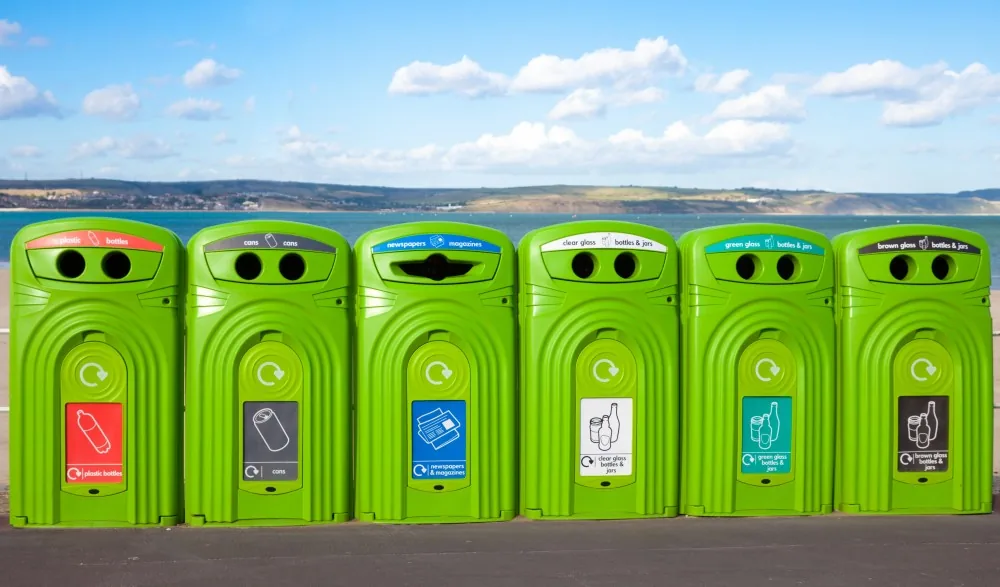
This is why plastic bags fall behind other types of packaging, insofar as they're recyclable but far less often recycled. WRAP's UK Plastics Pact report shows that 71.6% of plastic packaging is now reusable or recyclable, with 53% effectively recycled. However, plastic film is different. In 2024, just 31,000 tonnes of plastic film was collected for recycling out of 420,500 tonnes placed on the market, a collection rate of only 7%.
Change is coming, although more slowly than planned. Under England's Simpler Recycling reforms, every council will have to collect plastic film from households, but the deadline has been pushed back to 1 April 2030 from the original date of 31 March 2027. The main sticking point is capacity: the UK can currently reprocess only a fraction of the plastic film that household collections would bring in.
The good news is that home collection works when it's offered. The FlexCollect trials, run across 10 councils and more than 160,000 households, saw an average of 60% of households take part, with 89% of those surveyed satisfied with the service.
In practice:
Check your council's website before a plastic bag goes anywhere near your recycling bin. If film isn't listed as accepted, keep it out. And unless your council tells you otherwise, never bag up your recycling. Loose items are far easier to sort.
Where can you recycle plastic bags?
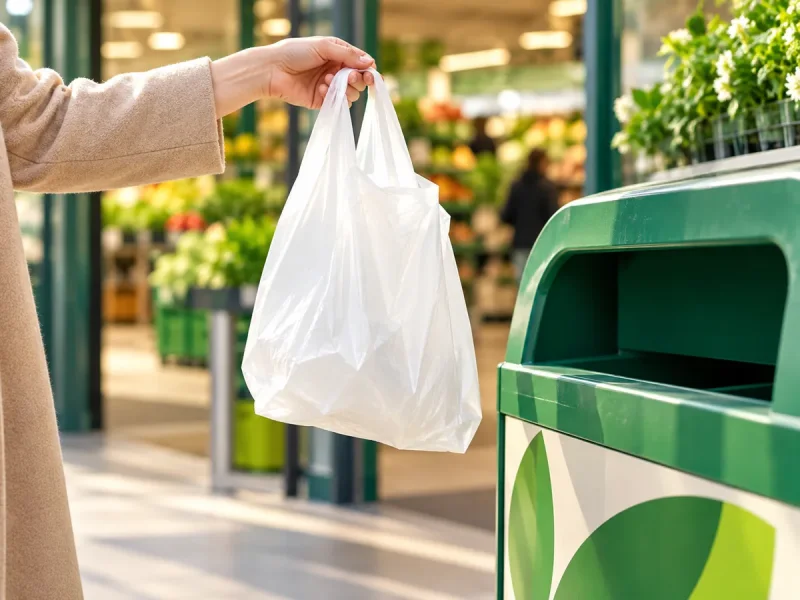
If your council won't take them, there are still ways to recycle your plastic bags. They can usually be recycled through:
- Supermarket soft plastic collection points, often found near the entrance or the tills
- Household waste recycling centres (some sites accept plastic film)
- Local council schemes, where they exist
Why?
These routes keep film separate from your household recycling and send it to facilities specifically equipped to handle it. That matters because flexible plastic makes up nearly a quarter of all UK consumer plastic packaging, yet only 7% of it is currently recycled. For now, dedicated collection points are the most reliable route for plastic bags.
In practice:
Use Recycle Now's Recycling Locator to find your nearest collection point, and check what it accepts before you set off. Schemes vary from store to store and change over time, so a quick look saves a wasted trip. Most accept the stretchy plastics you'd expect, such as carrier bags, bread bags and produce bags.
Which plastic bags can be recycled?
Most clean, stretchy plastic bags can be recycled at soft plastic collection points.
That usually includes:
- Single-use plastic carrier bags
- Plastic bags for life (check whether the retailer offers a free replacement first with our complete guide to bags for life)
- Delivery and mailing bags
- Bread, fruit and vegetable bags
Some bags, although they look similar, need different handling:
- Woven polypropylene bags, the heavy, fabric-feel shoppers, usually aren't accepted with film.
- Bags with foil or metallic finishes are hard to recycle and are often rejected.
- Compostable and biodegradable bags must stay out of plastic recycling altogether (more on these below).
Why?
Plastics that look alike can, in reality, be made from completely different materials. If they contain different polymers, coatings or additives, each needs its own process. Mixing incompatible materials lowers the quality of the recycled plastic, or can mean the whole batch can't be processed at all.
In practice:
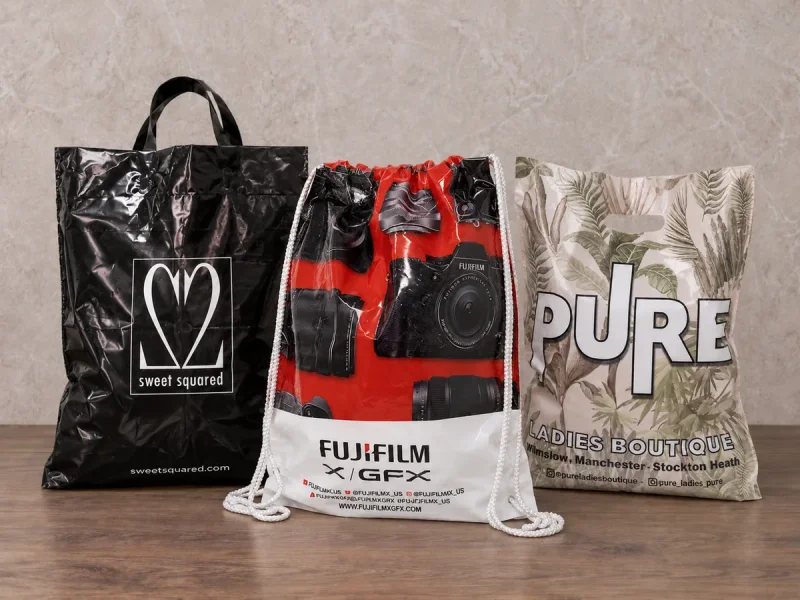
At any rate, empty the bag and take out any receipts or food residue, making sure it's clean and dry. Better still, get a few more trips out of it first. Most shoppers already do: Defra's latest figures show that the average person went from around 140 single-use bags a year before the charge to roughly 2 from the main retailers today, a fall of 98%. Nonetheless, the 94 retailers who reported data still sold 399 million single-use plastic bags in 2025 to 2026, so plenty still need a sensible home. For the full story, read our look back at the plastic carrier bag charge, 10 years on.
Are compostable carrier bags recyclable?
Despite looking and feeling like plastic, compostable bags, such as those made from potato starch, break down in a completely different way. In plastic recycling they're a contaminant rather than a recyclable.
Simply check the label to see how yours should be disposed of. Some are certified for home composting, others only break down in industrial composting facilities, and some councils accept compostable liners in food waste collections. If in doubt, follow your council's guidance.
Can you recycle paper, fabric and luxury carrier bags?
Paper carrier bags can go in your household paper recycling, as long as they're clean and dry.
That said, remove any rope, ribbon or fabric handles first, as these can't be recycled with the paper. Greasy or food-stained bags are better composted or put in general waste. Browse our printed paper bags for an easily recycled option, made with paper from our FSC® certified supply chain.
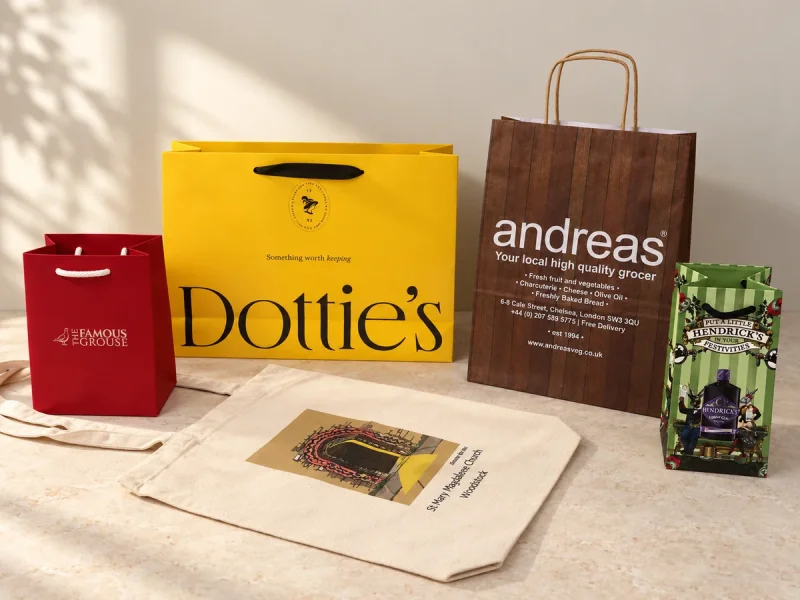
Luxury and laminated gift bags muddy the waters. The thin plastic lamination that gives them their gloss or matt finish is bonded to the paper and can't be separated, so laminated bags usually belong in general waste. Unlaminated paper gift bags can be recycled in the event that the handles and eyelets are removed. Given that most luxury bags are built to last, reuse is by far the best option.
Fabric bags, whether cotton, canvas or jute, can't go in household recycling. They're designed to be used again and again, so keep them in service as long as possible. When they're worn out, donate them or take them to a textile bank.
Does printing affect whether a bag can be recycled?
Generally, no. Printed paper and plastic bags can be recycled in the same way as plain ones, since the ink makes up only a tiny fraction of the bag and is removed or diluted during reprocessing.
Printing only affects recyclability inasmuch as it involves other materials. Metallic foil blocking, glitter or a laminated finish can make a bag harder to recycle, while the printed design on its own won't.
How long do plastic bags take to break down?
The truth is that there's no single answer. How quickly a bag breaks down depends on:
- the type of plastic (such as polyethylene or polypropylene) and its thickness
- exposure to sunlight, temperature and moisture
- whether it's buried, in water or out in the open
- any additives used during manufacture
Why?
A University of Plymouth study showed how much conditions matter.
After nine months in the open air, all the bag materials tested had broken into fragments. Yet conventional, biodegradable and oxo-biodegradable bags could still carry a full load of shopping after more than three years in soil or seawater. Even the compostable bag, which disappeared from the sea within three months, was still present in soil after 27 months. For the bigger picture, see are plastic carrier bags bad for the environment?
In practice:
Don't rely on a plastic bag to take care of itself. Reuse it for as long as it's up to the job, then make sure it's recycled through the right route. A bag that never ends up as litter doesn't need to break down at all.
Choosing recyclable carrier bags for your business
Choosing easily recycled materials, such as unlaminated paper or reusable fabric, keeps disposal simple. Printing clear disposal instructions on the bag itself turns every carrier into a quiet reminder of how to recycle it. And with our FSC® certification, you can be confident the paper in your bags comes from responsibly managed sources.
Explore our plastic free carrier bags, compare materials in our eco-friendly bags guide, or speak to our team about the right material for your brand.


